• Skip to primary navigation
  • Skip to main content
  • Skip to primary sidebar
  • EIKEIK
  • Kobelco
  • Takeuchi
  • Our Fleet
  • Service
  • Parts
  • About
  • Team
  • Contact

kobelco

The Biggest Mistakes Buyers Make When Purchasing Heavy Equipment (And How to Avoid Them)

7 Heavy Equipment Buying Mistakes to Avoid:

Buying heavy equipment isn’t just another purchase, it’s an investment in your company’s productivity, reputation, and profitability.

The right machine can keep projects moving for years. The wrong one can create expensive repairs, missed deadlines, and unnecessary frustration.

Whether you’re purchasing your first compact excavator or expanding a growing fleet, avoiding these common mistakes can save your business thousands of dollars.
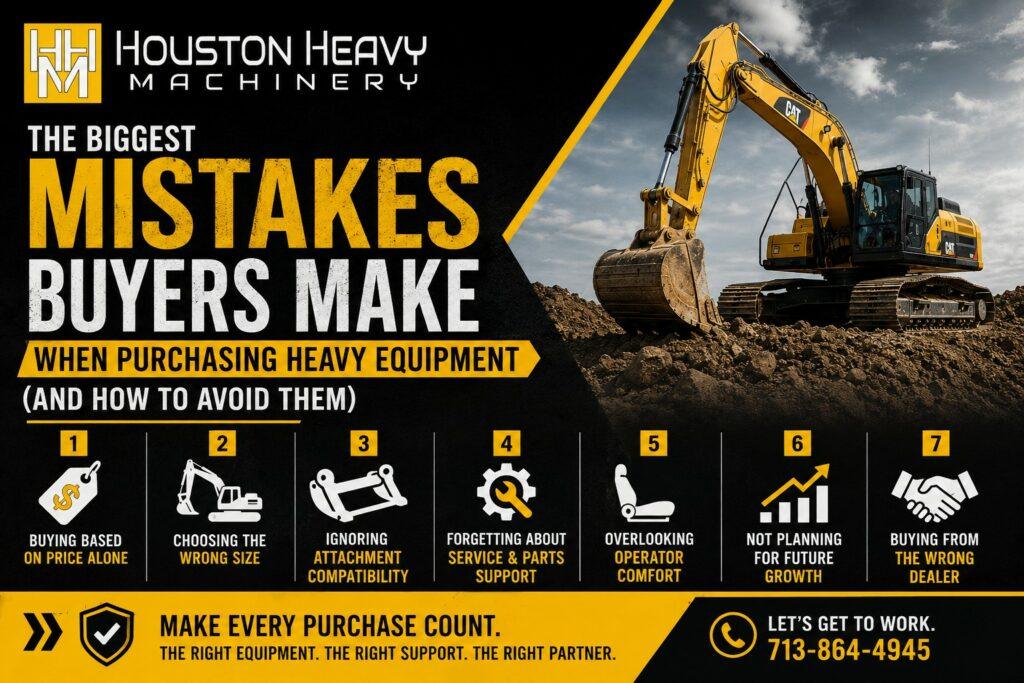
heavy equipment buying guide mistakes to avoid

1. Buying Based on Price Alone

Everyone wants a good deal.

Unfortunately, the cheapest machine isn’t always the least expensive to own.

A lower purchase price may come with:

  • Higher maintenance costs
  • More downtime
  • Lower resale value
  • Poor fuel efficiency
  • Limited parts availability

Instead of focusing only on the sticker price, consider the total cost of ownership over the life of the machine.

2. Choosing the Wrong Size Machine

Bigger isn’t always better.

Neither is smaller.

Oversized equipment can increase fuel consumption, transportation costs, and operating expenses. Undersized equipment often struggles to complete the work efficiently.

Before buying, ask yourself:

  • What type of projects do I complete most often?
  • How much space do I typically have to work?
  • What lifting capacity do I actually need?
  • Will I need to transport this machine frequently?

Matching the machine to your workload improves productivity while reducing unnecessary expenses.

3. Ignoring Attachment Compatibility

Attachments add versatility.

They also add value if they’re compatible.

Before purchasing equipment, verify that it works with the attachments you already own or plan to buy.

A machine that supports multiple attachments can replace several specialized pieces of equipment, helping your business accomplish more with fewer machines.

4. Forgetting About Service and Parts Support

Even the best equipment eventually needs maintenance.

That’s why choosing the right dealership matters just as much as choosing the right machine.

Ask questions like:

  • How quickly can replacement parts be delivered?
  • Does the dealership offer field service?
  • Are certified technicians available?
  • Can I get support when unexpected issues arise?

Reliable support keeps your equipment working and your projects on schedule.

5. Overlooking Operator Comfort

Your operators spend hours inside the cab every day.

Comfortable operators stay productive longer.

Features worth considering include:

  • Adjustable seating
  • Climate-controlled cabs
  • Easy-to-use controls
  • Improved visibility
  • Reduced vibration
  • Touchscreen displays

Small upgrades often make a noticeable difference over hundreds of operating hours.
6. Not Planning for Future Growth

Your equipment should support your business today and tomorrow.

Think about where your company will be in the next three to five years.

Purchasing equipment with room to grow can prevent another major investment sooner than expected.

7. Buying From the Wrong Dealer

A machine only tells part of the story.

The dealership behind it often determines your ownership experience.

Look for a dealer that offers:

  • Quality equipment
  • Knowledgeable staff
  • Financing options
  • Responsive customer service
  • Parts availability
  • Factory-trained technicians
  • Long-term support after the sale

A trusted dealer becomes a valuable business partner—not just a place to buy equipment.
Make Every Purchase Count

Heavy equipment represents one of the largest investments many contractors will make.

Taking time to evaluate your needs, compare options, and work with an experienced dealership can help you avoid costly mistakes while maximizing your return on investment.

The right equipment doesn’t just complete the job.

It helps your business grow.

Why Contractors Choose Houston Heavy Machinery

At Houston Heavy Machinery, we help contractors find equipment that fits their projects, budget, and long-term goals.

Whether you’re looking for compact equipment, excavators, wheel loaders, skid steers, or specialized machinery, our experienced team is here to answer your questions and guide you through every step of the buying process.

When you’re ready to invest in equipment that works as hard as you do, we’re ready to help.

Contact Houston Heavy Machinery today to find the right machine for your next project.
How to Know When It’s Time to Replace Your Heavy Equipment

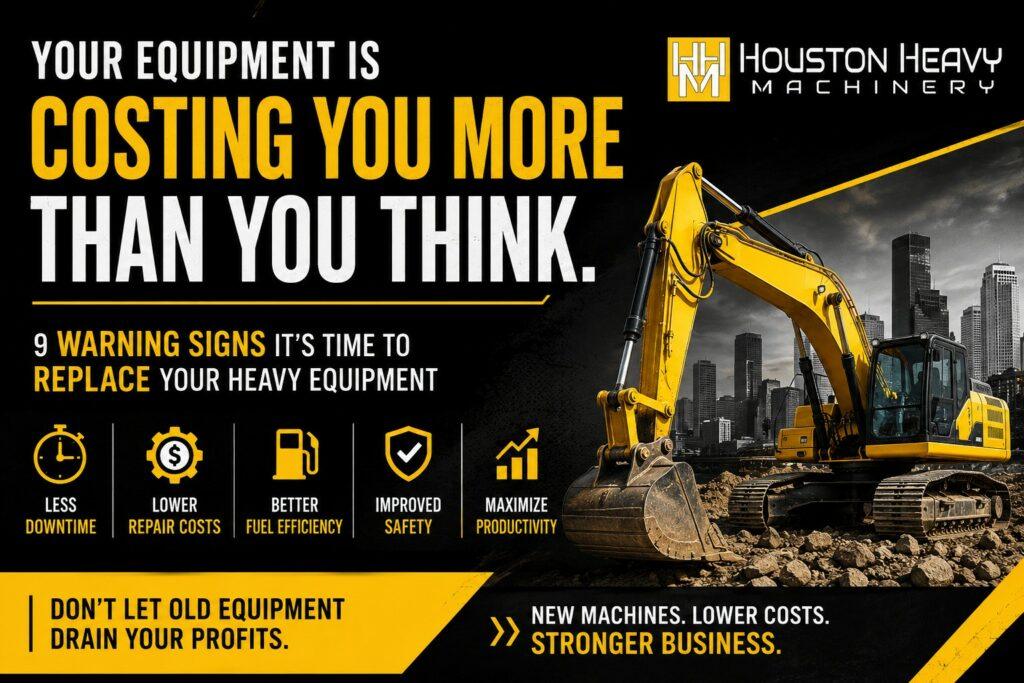
Stop Renting Headaches: 9 Warning Signs It’s Time to Replace Your Heavy Equipment

Every piece of equipment has a breaking point.

At first, repairs seem manageable. A hydraulic hose fails. A sensor throws a code. An alternator quits. Before long, the machine spends more time in the shop than on the jobsite.

Many contractors hold onto aging equipment because replacing it feels expensive. In reality, constant repairs, lost productivity, and unexpected downtime often cost far more.

If your equipment checks several of the boxes below, replacing it could save your business thousands of dollars each year.

Replace heavy equipment signs

1. Downtime Is Becoming the Norm

Equipment should generate revenue not excuses.

When breakdowns interrupt your schedule, crews sit idle, deadlines slip, and customers lose confidence. Every unexpected repair creates a ripple effect that impacts productivity across the entire project.

If your service calendar fills up faster than your work schedule, it’s time to take a closer look.

2. Repair Bills Keep Climbing

Occasional maintenance is part of equipment ownership.

Constant repairs are not.

Compare your annual repair costs over the past several years. If you’re pouring thousands into the same machine every year, those dollars might deliver a better return as part of a down payment on newer equipment.

Eventually, repairs become an investment you’ll never recover.

3. Your Machine Can’t Keep Up

Projects continue to evolve.

Equipment should evolve with them.

Older machines often struggle with today’s productivity demands. Slower cycle times, reduced lifting capacity, lower fuel efficiency, and outdated technology can limit how much work your crew completes each day.

The faster your equipment works, the more profitable every job becomes.

4. Finding Parts Has Become a Challenge

Nothing slows a repair like waiting weeks for parts.

As machines age, manufacturers discontinue components and suppliers carry less inventory. A simple repair can leave equipment parked while everyone waits for parts to arrive.

Reliable parts availability keeps projects moving.

5. Fuel Costs Continue to Rise

Fuel represents one of the largest operating expenses on any jobsite.

Many newer machines offer improved engine technology that delivers more work while consuming less fuel. Even small improvements in efficiency can add up over hundreds or thousands of operating hours each year.

Lower fuel consumption means lower operating costs.

6. Safety Features Feel Outdated

Operator safety should never become an afterthought.

Modern equipment often includes features such as:

  • Improved visibility
  • Backup cameras
  • Better lighting
  • Enhanced stability systems
  • More ergonomic controls
  • Advanced monitoring systems

These upgrades help reduce risk while making operators more comfortable and productive throughout the workday.

7. Your Customers Notice the Difference

Your equipment represents your company every time it arrives on a jobsite.

Well-maintained, modern machines create a professional first impression and demonstrate that your business invests in reliability.

Appearance alone won’t win contracts, but it certainly doesn’t hurt.

8. Financing Makes More Sense Than Repairs

Many owners assume replacing equipment requires a massive upfront investment.

That’s not always the case.

Flexible financing options can make monthly payments surprisingly competitive when compared to ongoing repair costs, lost production, rental expenses, and emergency service calls.

Sometimes the less expensive option isn’t repairing the machine, it’s replacing it.

9. You’re Constantly Renting Backup Equipment

This may be the biggest warning sign of all.

If you regularly rent equipment because your own machine isn’t available, you’re paying twice.

First, you pay to repair your equipment.

Then, you pay again to replace it temporarily.

At that point, ownership no longer delivers the value it should.

Replace Equipment Before It Replaces Your Profits

Successful contractors don’t wait until equipment completely fails.

They evaluate operating costs, downtime, reliability, and productivity before problems become emergencies.

Replacing aging equipment at the right time can:

  • Reduce costly downtime
  • Lower maintenance expenses
  • Improve fuel efficiency
  • Increase productivity
  • Improve operator safety
  • Help crews stay on schedule
  • Strengthen customer confidence

The goal isn’t simply owning newer equipment.

The goal is keeping your business moving.

Houston Heavy Machinery Keeps You Working

Whether you’re upgrading a single machine or expanding your fleet,Ā Houston Heavy MachineryĀ offers dependable equipment backed by knowledgeable professionals who understand the demands of your industry.

Our team can help you compare options, explore financing, and find equipment that matches your workload and budget, without the pressure.

When your equipment works harder, your business performs better.

Ready to upgrade your fleet? Contact Houston Heavy Machinery today and let us help you find the right machine for your next job.

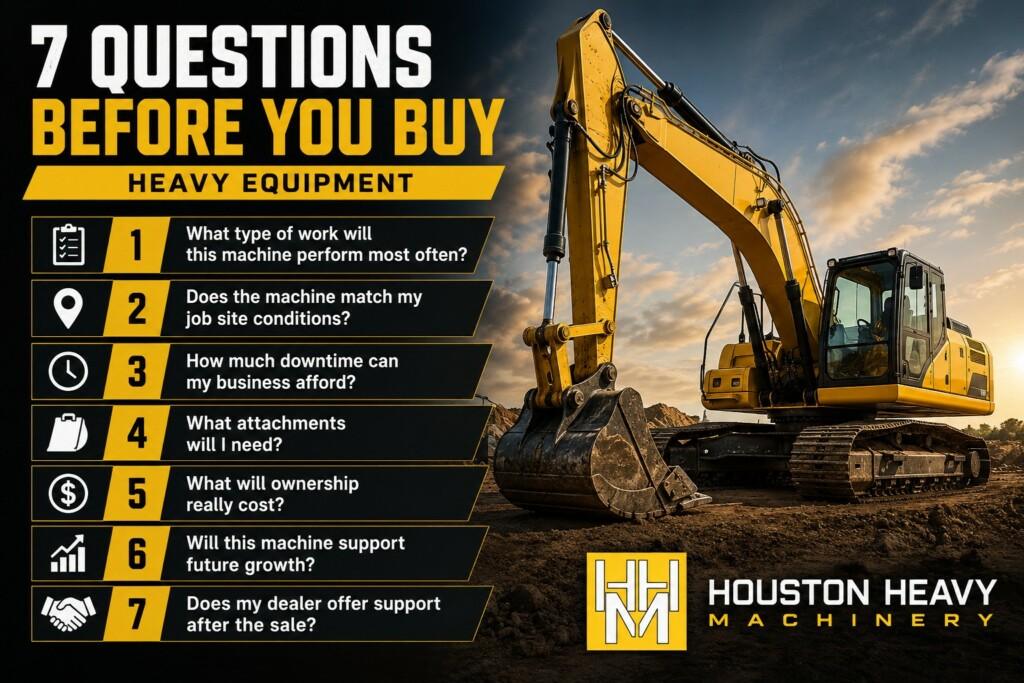
Thinking About Buying Heavy Equipment? Ask These 7 Questions First

Before buying heavy equipment, ask these seven important questions to maximize productivity, control costs, and support growth.

Purchasing heavy equipment requires more than comparing price tags. The right machine can improve productivity, reduce operating costs, and help your business grow. The wrong machine can create costly problems for years.

Before investing in your next piece of equipment, ask these seven questions.

1. What Type of Work Will This Machine Perform Most Often?

Many contractors make the mistake of buying heavy equipment based on occasional projects instead of everyday work.

Focus on the jobs your crew performs most often. A machine that handles 90% of your workload efficiently usually delivers more value than one designed for rare situations.

2. Does the Machine Match My Job Site Conditions?

Every job site presents unique challenges.

Tight urban projects, residential developments, muddy terrain, and large commercial sites all require different equipment capabilities. Consider machine size, operating weight, reach, and maneuverability before making a decision.

The right machine should fit your work environment as well as your production goals.

3. How Much Downtime Can My Business Afford?

Downtime affects schedules, labor costs, and customer satisfaction.

Before purchasing equipment, evaluate the manufacturer’s reputation for reliability and parts availability. A dependable machine helps crews stay productive and keeps projects moving forward.

4. What Attachments Will I Need?

Attachments can dramatically increase a machine’s versatility.

Buckets, breakers, grapples, augers, compactors, and thumbs allow contractors to tackle multiple tasks with a single machine. Before purchasing equipment, consider both your current and future attachment requirements.

Versatility often delivers a better return on investment.

5. What Will Ownership Really Cost?

The purchase price represents only part of the investment.

Contractors should also evaluate:

  • Maintenance costs
  • Fuel consumption
  • Insurance expenses
  • Transportation costs
  • Replacement parts
  • Financing costs

Understanding total ownership costs helps businesses make smarter purchasing decisions.

6. Will This Machine Support Future Growth?

The equipment you buy today should support the business you want tomorrow.

Consider future projects, expected workload increases, and expanding service offerings. Choosing equipment that supports growth can help avoid another major purchase sooner than expected.

7. Does My Dealer Offer Support After the Sale?

A strong dealership relationship can make a major difference throughout the life of a machine.

Parts availability, service support, financing options, and equipment expertise all contribute to a better ownership experience. Contractors often find that dealership support becomes just as important as the machine itself.

Partner With Houston Heavy Machinery

At Houston Heavy Machinery HHM, we help contractors choose equipment that fits their business, budget, and job site requirements. Our team works closely with customers to understand their goals and recommend solutions that maximize productivity and long-term value.

Whether you’re adding a compact excavator, skid steer, wheel loader, or larger construction equipment, we can help you make a confident investment.

Looking for Your Next Machine?

Call Houston Heavy Machinery today atĀ 713-864-4945Ā and let our team help you find the right equipment for your operation.

Houston Heavy Machinery Is Texas’ #1 Source for Compact Equipment

Discover why contractors choose Houston Heavy Machinery for compact equipment, expert support, reliable service, and family-owned customer care throughout the Houston area.

Choosing the right compact equipment dealership can make a significant difference in your project’s success. Contractors need reliable machines, knowledgeable support, available parts, and responsive service to keep jobs moving forward.

At Houston Heavy Machinery, we combine industry-leading equipment with family-owned service to help contractors, landscapers, utility crews, and construction companies get more done

A Wide Selection of Compact Equipment

Every job requires the right machine.

Houston Heavy Machinery, HHM, offers a variety of compact equipment solutions designed to handle projects of all sizes. Whether you’re working in residential developments, commercial construction, utility installation, landscaping, or site preparation, we help you find equipment that matches your needs.

Our compact equipment lineup helps customers tackle tight job sites without sacrificing performance or productivity.

Equipment Built for Texas Job Sites

Texas contractors face demanding conditions year-round. From summer heat and heavy rain to challenging soil conditions, equipment must perform when the job demands it.

Houston Heavy Machinery offers machines that deliver the power, durability, and efficiency contractors expect on Texas job sites. Our team understands local construction challenges and recommends equipment that can handle the work.

Knowledgeable Sales and Support

Buying equipment involves more than comparing specifications.

Our team takes the time to understand your application, job site conditions, and business goals before recommending a machine. We focus on helping customers make informed decisions instead of pushing unnecessary upgrades or equipment.

That approach has helped Houston Heavy Machinery build long-term relationships with customers across the Greater Houston area.

Parts and Service That Keep You Working

Equipment downtime costs money.

That’s why Houston Heavy Machinery supports customers with responsive parts and service solutions designed to keep machines operating at peak performance. Our team works quickly to identify parts, schedule service, and minimize downtime whenever issues arise.

When customers need support, they can reach real people who understand heavy equipment.

Family-Owned Service Makes the Difference

Many contractors appreciate working with a dealership that values relationships as much as sales.

As a family-owned business, Houston Heavy Machinery focuses on customer service, honesty, and long-term partnerships. We treat customers like partners and work hard to earn their trust on every transaction.

Our customers know they can count on us long after the sale.

Conveniently Located for Houston Contractors

Houston Heavy Machinery HHM serves contractors throughout Houston and the surrounding areas. Our location allows customers to access equipment, parts, service, and support without the delays often associated with larger dealerships.

Whether you need a machine for your next project or support for your current fleet, our team stands ready to help.

Experience the Houston Heavy Machinery Difference

Contractors choose Houston Heavy Machinery because we offer more than equipment. We provide expertise, support, and service that help businesses stay productive and profitable.

From compact equipment and excavators to parts and service, our team remains committed to helping customers succeed.

Looking for Compact Equipment in Houston?

Contact Houston Heavy Machinery today atĀ 713-864-4945Ā and discover why contractors across the Houston area trust us for their equipment needs.

Why Using Genuine Heavy Equipment Parts Saves Contractors Money

Learn why genuine heavy equipment parts help contractors reduce downtime, improve machine performance, and protect their equipment investment.

When a machine goes down, every minute counts. Contractors need parts that fit correctly, perform reliably, and keep equipment operating at peak efficiency. While aftermarket parts may appear less expensive upfront, genuine OEM parts often deliver greater value over the life of the machine.

Choosing the right replacement parts can reduce downtime, improve performance, and protect your investment.

What Are Genuine OEM Parts?

OEM stands for Original Equipment Manufacturer. These parts come directly from the manufacturer that designed and built the machine.

Manufacturers engineer OEM parts to meet exact specifications, ensuring proper fit, performance, and durability. Because these parts match the machine’s original design, technicians can install them quickly and confidently.

Reduce Costly Downtime

Downtime costs contractors money every day.

When an aftermarket part fails prematurely or doesn’t fit properly, crews lose valuable time troubleshooting, making modifications, or waiting for replacement parts. Genuine OEM parts eliminate much of that risk by providing the exact component your machine requires.

The right part helps get equipment back to work faster.

Maximize Equipment Performance

Manufacturers design every component to work together as a complete system.

Hydraulic pumps, filters, seals, sensors, and engine components all play a role in machine performance. Genuine parts help maintain the efficiency, power, and reliability operators expect from their equipment.

When every component performs as intended, the machine delivers better productivity on the job site.

Protect Your Investment

Heavy equipment represents a significant investment for any contractor.

Using quality replacement parts helps protect critical systems from unnecessary wear and damage. A low-cost component that fails prematurely can create expensive repairs throughout the machine.

Many contractors choose OEM parts because they help preserve equipment value and extend machine life.

Improve Reliability in Demanding Conditions

Construction sites demand reliable equipment.

Whether crews work in extreme heat, mud, dust, or heavy production environments, equipment must perform every day. Genuine parts undergo extensive testing to meet manufacturer standards and withstand demanding job site conditions.

Contractors rely on OEM components because they deliver consistent performance when it matters most.

Common Parts That Require Regular Replacement

Routine maintenance helps prevent unexpected breakdowns and extends equipment life.

Some of the most commonly replaced parts include:

  • Hydraulic filters
  • Fuel filters
  • Air filters
  • Engine oil filters
  • Undercarriage components
  • Teeth and cutting edges
  • Hydraulic hoses
  • Seals and gaskets
  • Sensors and electrical components
  • Wear plates

Replacing worn components before they fail helps reduce costly repairs and keeps machines operating efficiently.

Partner With a Parts Team You Can Trust

Finding the right part quickly can make the difference between staying productive and losing valuable job site time.

At Houston Heavy Machinery, our parts team helps contractors identify the correct components, locate hard-to-find parts, and minimize equipment downtime. Whether you need routine maintenance items or major replacement components, we work to get you back up and running as quickly as possible.

Need Heavy Equipment Parts?

Call Houston Heavy Machinery atĀ 713-955-4120Ā to speak with our parts department and find the components you need to keep your equipment working hard.

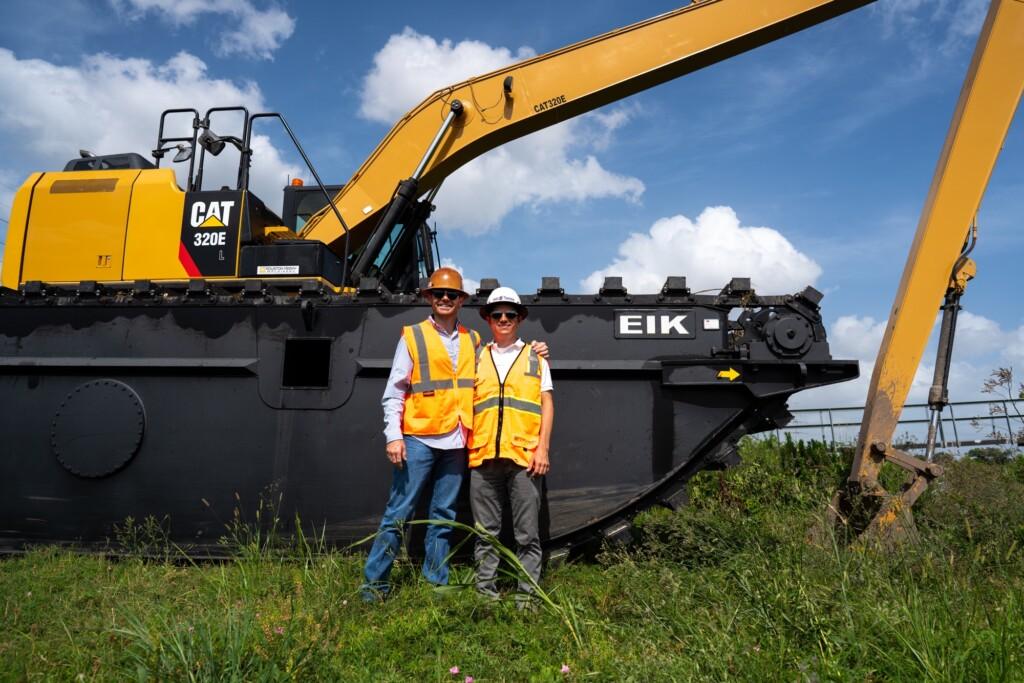
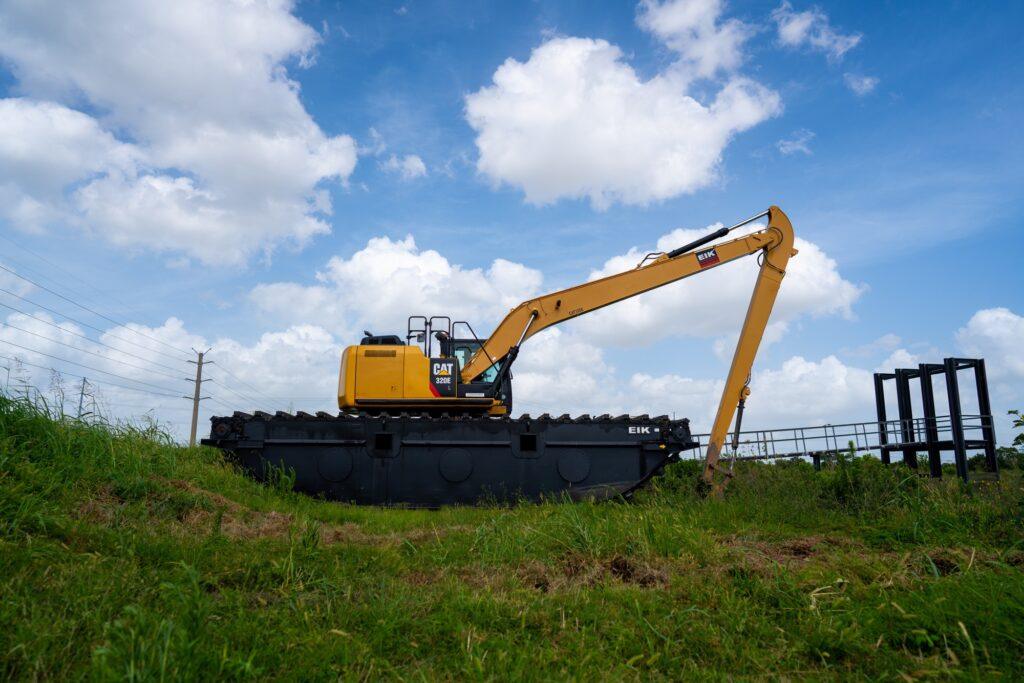
Amphibious Excavators: The Best Solution for Marsh Work and Dredging

Learn how amphibious excavators help contractors tackle marsh work, wetland restoration, dredging, and water management projects with greater efficiency and reliability.

When job sites become too wet, muddy, or unstable for traditional equipment, amphibious excavators keep the work moving. Contractors use these specialized machines to tackle marshes, wetlands, swamps, shallow waterways, and other challenging environments where standard excavators struggle to operate.

From dredging waterways to restoring wetlands, amphibious excavators give operators the reach, flotation, and stability needed to work efficiently in difficult conditions.

What Is an Amphibious Excavator?

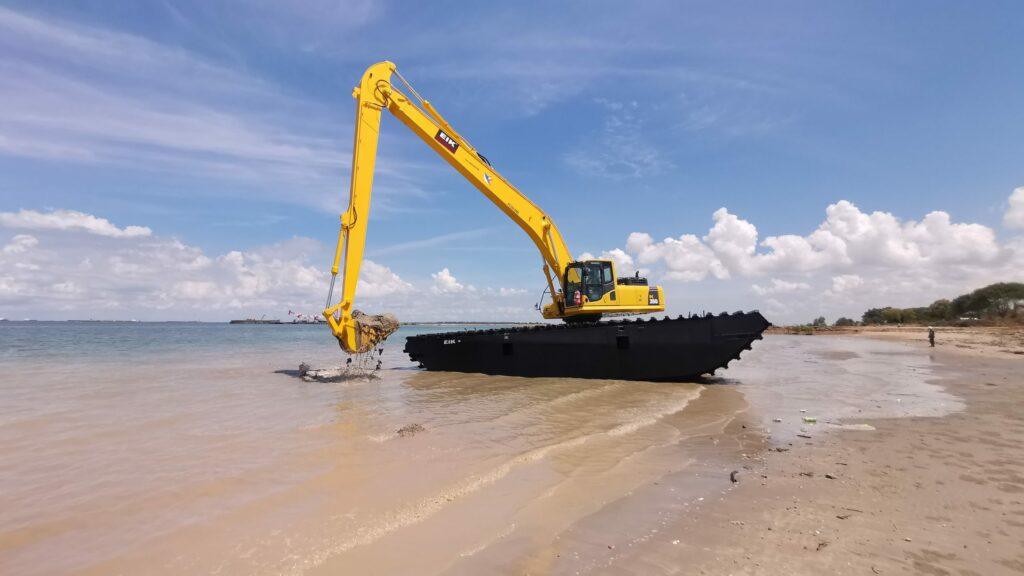
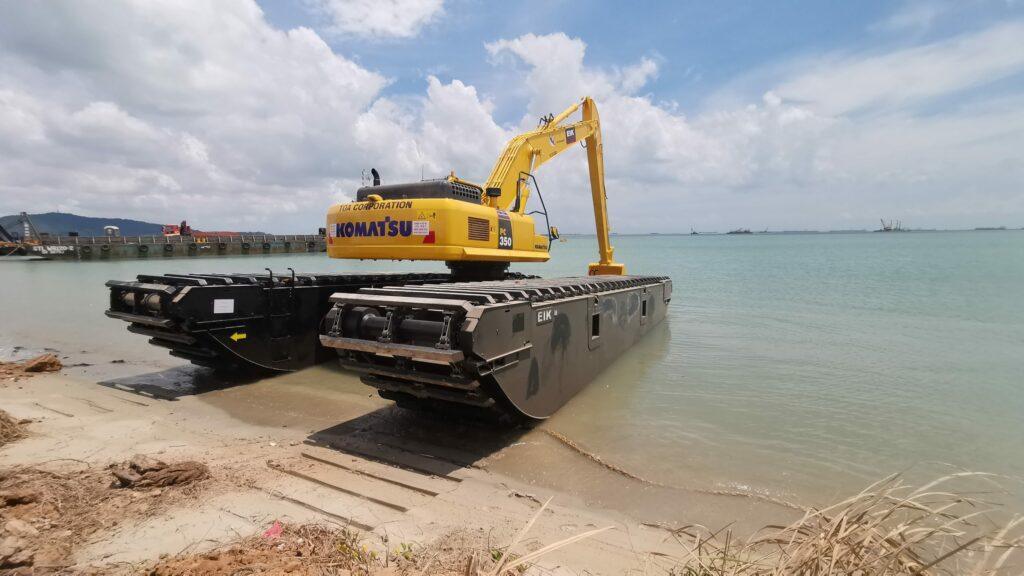
An amphibious excavator combines the power of a traditional excavator with a specially engineered pontoon undercarriage. Instead of relying on conventional tracks alone, the machine uses sealed pontoons that allow it to float and travel across soft, saturated terrain.

The pontoon system spreads the machine’s weight over a larger surface area, reducing ground pressure and helping the excavator travel across terrain that would trap or sink conventional equipment.

Why Contractors Choose Amphibious Excavators

Access Areas Other Equipment Cannot Reach

Amphibious excavators allow contractors to work in locations that often remain inaccessible to traditional machines. Marshes, wetlands, retention ponds, and flooded areas no longer stop progress or delay projects.

Instead of spending time and money building temporary access roads, crews can move directly into the work area and begin operations.

Reduce Ground Pressure

Soft soil creates major challenges for heavy equipment. Amphibious excavators distribute their weight across large pontoons, helping operators move across unstable ground while minimizing surface disturbance.

This design allows crews to maintain productivity while protecting sensitive terrain.

Improve Safety on Challenging Job Sites

Unstable ground increases the risk of equipment becoming stuck, tipping, or sinking. Amphibious excavators provide the flotation and stability operators need to work confidently in wet environments.

By using equipment designed specifically for these conditions, contractors can reduce downtime and improve job site safety.

Increase Productivity

Amphibious excavators eliminate many of the obstacles that slow down traditional excavation projects. Crews spend less time creating access routes and more time completing productive work.

Faster access, improved mobility, and fewer delays help contractors complete projects on schedule.

Common Applications for Amphibious Excavators

Contractors use amphibious excavators for a wide range of projects, including:

  • Marsh and wetland restoration
  • Canal and waterway dredging
  • Pond maintenance
  • Flood control projects
  • Pipeline installation
  • Shoreline stabilization
  • Environmental remediation
  • Drainage improvements
  • Land reclamation
  • Aquatic vegetation removal

Across Texas and the Gulf Coast, contractors rely on amphibious excavators to perform critical work in environments that challenge conventional equipment.

Industries That Depend on Amphibious Excavators

Several industries regularly use amphibious excavators to complete specialized projects:

  • Civil construction
  • Oil and gas
  • Municipal infrastructure
  • Environmental restoration
  • Dredging operations
  • Water management
  • Utility construction
  • Coastal protection

These machines help contractors complete demanding projects while minimizing disruption to surrounding land and waterways.

Choosing the Right Amphibious Excavator

Before selecting an amphibious excavator, evaluate:

  • Water depth requirements
  • Ground conditions
  • Reach and digging requirements
  • Attachment compatibility
  • Transportation needs
  • Project duration

Choosing the right machine helps maximize productivity, improve efficiency, and reduce operating costs throughout the project.

Houston Heavy Machinery Can Help

At Houston Heavy Machinery, we help contractors find equipment that matches their job site conditions and project goals. Whether you’re dredging waterways, restoring wetlands, or working in challenging marsh conditions, our team can help you identify the right excavator solution.

We evaluate your project requirements, recommend the right machine and attachments, and provide financing options that support your business.

Looking for Equipment for Your Next Marsh or Dredging Project?

Call Houston Heavy Machinery today atĀ 713-864-4945Ā to discuss your project and explore equipment solutions built for tough environments.

How to Choose the Right Excavator Size for Your Next Project

Selecting the right excavator can significantly impact productivity, operating costs, and project timelines. While many contractors focus on horsepower and price, choosing the proper machine size is often the most important factor in maximizing efficiency on the job site.

From compact residential projects to large-scale commercial construction, understanding the strengths of each excavator class can help you make the best investment for your business.

Why Excavator Size Matters

An excavator that is too small may struggle to complete the work efficiently, resulting in longer project timelines and increased wear on the machine. On the other hand, an oversized excavator can create transportation challenges, higher fuel costs, and difficulty maneuvering in confined spaces.

The goal is to match the machine to the job.

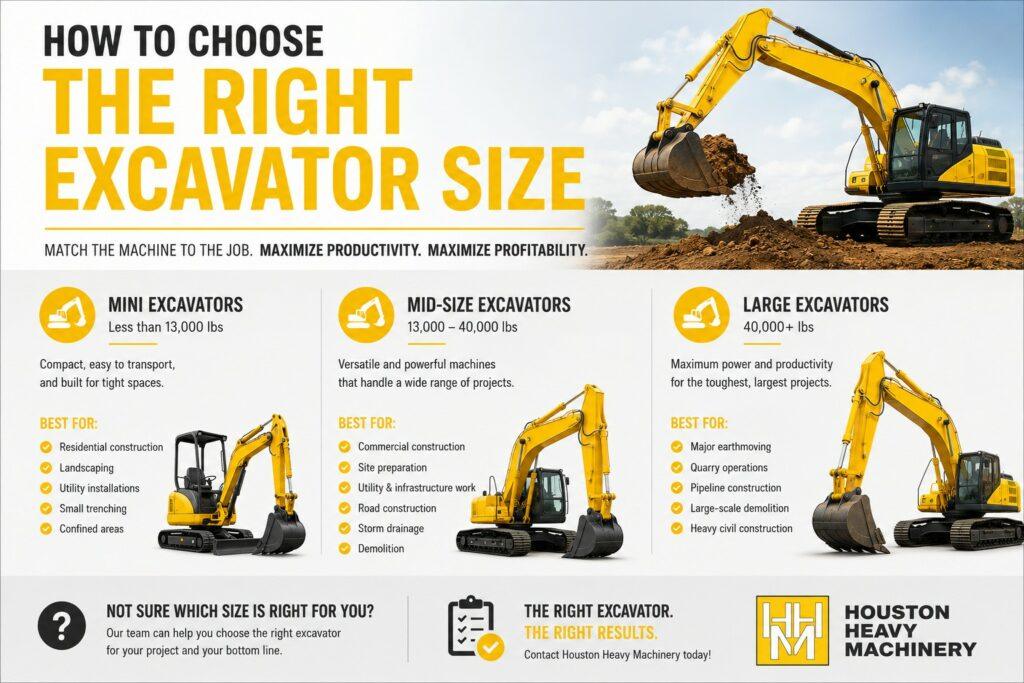
Mini Excavators: Ideal for Tight Spaces

Mini excavators typically weigh less than 13,000 pounds and offer exceptional maneuverability.

They are commonly used for:

  • Residential construction
  • Landscaping projects
  • Utility installations
  • Fence and pool construction
  • Small trenching projects
  • Work in confined areas

Mini excavators are easy to transport and can access areas where larger machines simply cannot operate.

Mid-Size Excavators: The Versatile Workhorse

Mid-size excavators provide a balance of power, reach, and versatility.

These machines excel in:

  • Commercial construction
  • Site preparation
  • Utility and infrastructure work
  • Land clearing
  • Road construction
  • Storm drainage projects

For many contractors, mid-size excavators offer the best combination of performance and operating costs.

Large Excavators: Maximum Productivity

When production is the top priority, large excavators deliver the digging force and lifting capacity needed for demanding applications.

Common uses include:

  • Major earthmoving projects
  • Quarry operations
  • Pipeline construction
  • Mining applications
  • Large-scale demolition
  • Heavy civil construction

Large excavators allow operators to move more material in less time, increasing productivity on large job sites.

Questions to Ask Before Choosing an Excavator

Before selecting an excavator, consider:

What type of work will you perform?

Different applications require different machine capabilities.

How much space is available?

Job site access can determine the largest machine you can safely operate.

What depth and reach are required?

Digging depth and operating reach vary significantly between machine classes.

How will the machine be transported?

Transportation requirements can impact both cost and scheduling.

What attachments will you use?

Many projects require specialized attachments such as breakers, thumbs, augers, or grapples.

Find the Right Excavator at Houston Heavy Machinery

Whether you need a compact mini excavator for residential work or a powerful machine for large-scale construction projects, Houston Heavy Machinery can help you find the right equipment for the job.

Our team can evaluate your project requirements and recommend the excavator that delivers the best performance, productivity, and value for your operation.

Contact Houston Heavy Machinery today to learn more about our inventory of excavators and heavy equipment solutions.

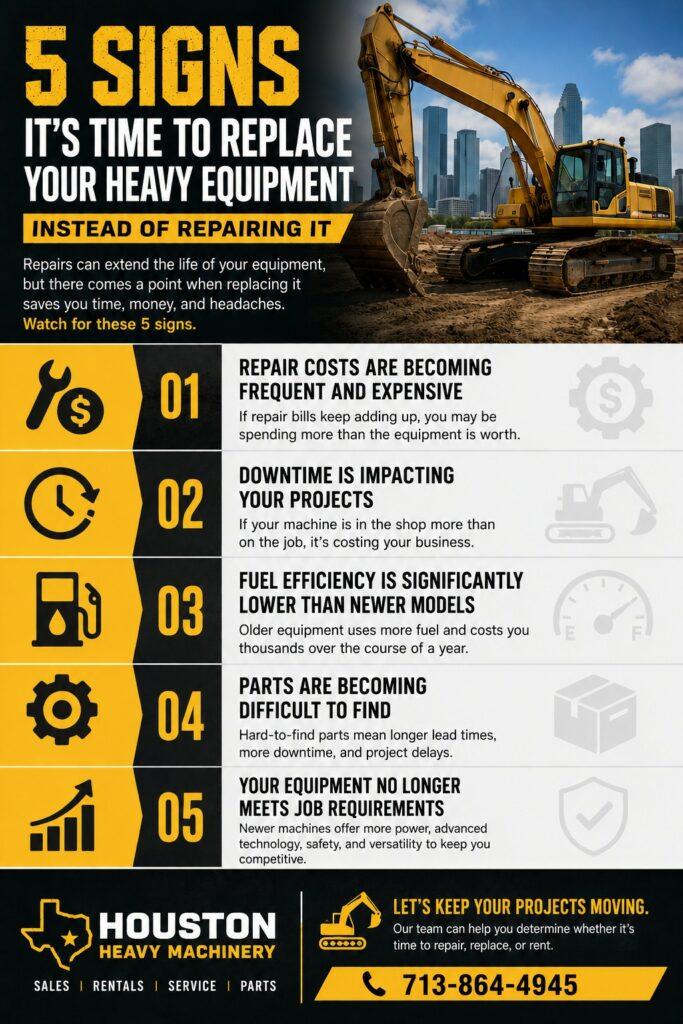
5 Signs It’s Time to Replace Your Heavy Equipment Instead of Repairing It

For many contractors, construction companies, and earthmoving professionals, heavy equipment is one of the biggest investments they make. When a machine starts experiencing problems, the question inevitably comes up: Should you repair it or replace it?

While routine maintenance and repairs can extend the life of your equipment, there comes a point when continuing to invest in repairs costs more than upgrading to a newer machine. Knowing when you’ve reached that point can help reduce downtime, improve productivity, and save money in the long run.

1. Repair Costs Are Becoming Frequent and Expensive

Every machine requires maintenance, but if you’re constantly scheduling repairs, replacing major components, or dealing with unexpected breakdowns, it may be time to evaluate replacement options.

A good rule of thumb is to compare annual repair costs against the machine’s current value. If repair expenses continue to rise year after year, investing those dollars into a newer machine may provide a better return.

2. Downtime Is Impacting Your Projects

When equipment is unavailable, projects slow down. Deadlines become harder to meet, crews sit idle, and profitability suffers.

If a machine spends more time in the shop than on the job site, it’s likely costing your business more than the repair invoice suggests. Lost productivity can quickly outweigh the cost of purchasing or renting a newer piece of equipment.

3. Fuel Efficiency Is Significantly Lower Than Newer Models

Modern heavy equipment is designed with improved fuel efficiency, advanced engine technology, and smarter hydraulic systems.

Older machines often consume more fuel while delivering lower performance. Over the course of a year, increased fuel costs can add up to thousands of dollars, making replacement a financially sound decision.

4. Parts Are Becoming Difficult to Find

As equipment ages, manufacturers may discontinue certain components or make them harder to source.

Long lead times for replacement parts can create extended downtime and project delays. If your maintenance team is constantly searching for hard-to-find components, upgrading to a newer machine can reduce these challenges and improve reliability.

5. Your Equipment No Longer Meets Job Requirements

Construction projects continue to evolve, and customer expectations grow every year.

A machine that was perfect five or ten years ago may not have the power, technology, reach, lifting capacity, or versatility needed for today’s projects. Newer models often offer enhanced productivity, improved operator comfort, advanced safety features, and attachment compatibility that help contractors stay competitive.

Repair, Replace, or Rent?

Every situation is different. In some cases, repairing a machine makes the most financial sense. In others, purchasing a newer unit or renting equipment for specific projects may be the smarter choice.

At Houston Heavy Machinery, our team helps contractors evaluate equipment performance, maintenance history, operating costs, and project requirements to determine the best solution for their business.

Whether you’re looking for excavators, wheel loaders, skid steers, dozers, compact equipment, parts, or expert service support, we can help keep your operation running efficiently and profitably.

Partner with Houston Heavy Machinery

Making the right equipment decision can have a major impact on productivity, operating costs, and project success. If you’re unsure whether it’s time to repair, replace, or rent, contact HHM today. Our experienced team is ready to help you find the equipment solutions that keep your projects moving forward.

Reasons Why You Should Invest in a Kobelco SK210LC-11 Excavator

Discover the Power and Efficiency of the SK 210LC-11 Excavator

The SK 210LC-11 excavator is the ultimate machine for tackling tough tasks in tight spaces. Engineered with precision and power, this Kobelco excavator is perfect for demolition, land clearing, and infrastructure projects.

Key Features of the SK 210LC-11:

  • Exceptional Power: Equipped with a robust engine, the SK 210LC-11 delivers unparalleled breakout force, ensuring you can handle the most demanding jobs with ease.
  • Compact and Agile: The reduced tail swing radius and narrow track width allow for superior maneuverability in confined spaces, making it ideal for urban construction and utility work.
  • Enhanced Versatility: With optional bolt-on rubber pads and pre-plumbed auxiliary lines, this excavator is ready for any attachment, providing the versatility needed for a wide range of applications.
  • Ease of Transport: The SK 210LC-11‘s compact design ensures easy transportation, allowing you to move between job sites efficiently during regular business hours.
KOBELCO SK210LC-10 NADownload

Experience the SK 210LC-11 in Action

Join us for a detailed walkthrough of the SK 210LC-11 excavator, where we’ll showcase its advanced features and capabilities. See firsthand how this machine can transform your job site with its superior performance and efficiency. Why Choose the SK 210LC-11?

  • Durable Construction: Built to withstand the harshest conditions, ensuring long-term reliability and minimal downtime.
  • Operator Comfort: Designed with the operator in mind, featuring a comfortable cab with easy-to-use controls, reducing fatigue and increasing productivity.
  • Fuel Efficiency: Engineered for optimal fuel consumption, saving you money on operating costs while reducing environmental impact.

OPERATING WEIGHT

50,000 lbs
22,700 kg

NET POWER

160 hp
119 kW

MAX DIG DEPTH

22′
6,700 mm

Ready to Elevate Your Job Site? Learn more about the SK 210LC-11 and see it in action by scheduling a demo today!

Visit us at www.houstonmachinery.com to get started. For more information or to speak with a representative, call us at (713) 864-4945.

Explore our extensive inventory of construction equipment for sale or rent at http//:www.houstonmachinery.com/our-fleet

The SK 210LC-11: Power, Efficiency, and Reliability. Transform your work site today.

Mini Excavator vs. Mid-Size Excavator: Which One Is The Best Choice for You?

Choosing the right excavator can make a big difference on the job site. The wrong machine can slow down production, increase costs, and create unnecessary challenges.

At Houston Heavy Machinery (HHM), contractors often ask whether they should choose a mini excavator or a mid-size excavator. The right machine depends on your workload, job site conditions, and project requirements.

Let’s compare both options.

What Is a Mini Excavator?

Mini excavators weigh less than 13,000 pounds and excel in tight spaces and smaller-scale projects.

Mini excavators are commonly used for:

  • Residential construction
  • Landscaping projects
  • Utility installation
  • Trenching
  • Fence installation
  • Pool construction

Their compact size makes them easy to transport and maneuver.

Benefits of a Mini Excavator

Mini excavators offer several advantages.

Easy Access

Mini excavators can fit into tight spaces where larger equipment cannot operate efficiently.

This makes them ideal for residential and urban projects.

Lower Ground Impact

Their lighter weight creates less disturbance to existing landscaping, driveways, and finished surfaces.

Lower Transportation Costs

Mini excavators are easier and more affordable to transport, often requiring only a smaller truck and trailer.

Reduced Fuel Consumption

Because of their smaller engines, mini excavators generally use less fuel than larger machines.

What Is a Mid-Size Excavator?

Mid-size excavators typically weigh between 13,000 and 40,000 pounds.

These machines offer more digging depth, lifting capacity, and hydraulic power than compact equipment.

Contractors rely on mid-size excavators for commercial construction, utility installation, site development, roadwork, demolition, and other demanding earthmoving applications:

  • Commercial construction
  • Roadwork
  • Site development
  • Drainage projects
  • Large utility installations
  • Land clearing

They provide a balance between power and versatility.

Benefits of a Mid-Size Excavator

Increased Digging Power

Mid-size excavators can handle larger excavation projects with greater efficiency.

Higher Lifting Capacity

These machines can safely lift heavier materials and attachments.

Greater Reach

A longer boom and arm allow operators to cover more ground without repositioning the machine as often.

Improved Productivity

For larger projects, a mid-size excavator can often complete work faster than a compact machine.

When Should You Choose a Mini Excavator?

A mini excavator may be the best choice when:

  • Space is limited
  • Access is restricted
  • Ground disturbance must be minimized
  • Transportation costs are a concern
  • The project involves residential work

Many contractors find mini excavators to be highly versatile for everyday jobs.

When Should You Choose a Mid-Size Excavator?

A mid-size excavator is often the better option when:

  • Large volumes of material must be moved
  • Greater digging depth is required
  • Heavy lifting is involved
  • Productivity is a top priority
  • Commercial construction is being performed

For demanding projects, the additional power can significantly improve efficiency.

Popular Excavator Options at HHM

Houston Heavy Machinery (HHM) offers excavators for a wide range of applications.

Whether you need a compact machine for residential work or a larger excavator for commercial construction, our team can help you choose the right equipment for your operation.

Selecting the correct machine helps reduce operating costs, improve productivity, and maximize job site performance.

Let HHM Help You Choose the Right Excavator

Every project is different. The best excavator for one job may not be the best choice for another.

At HHM, our equipment specialists work closely with contractors to understand their needs and recommend the right machine for the job.

Contact Houston Heavy Machinery today to learn more about our available excavators and equipment solutions.

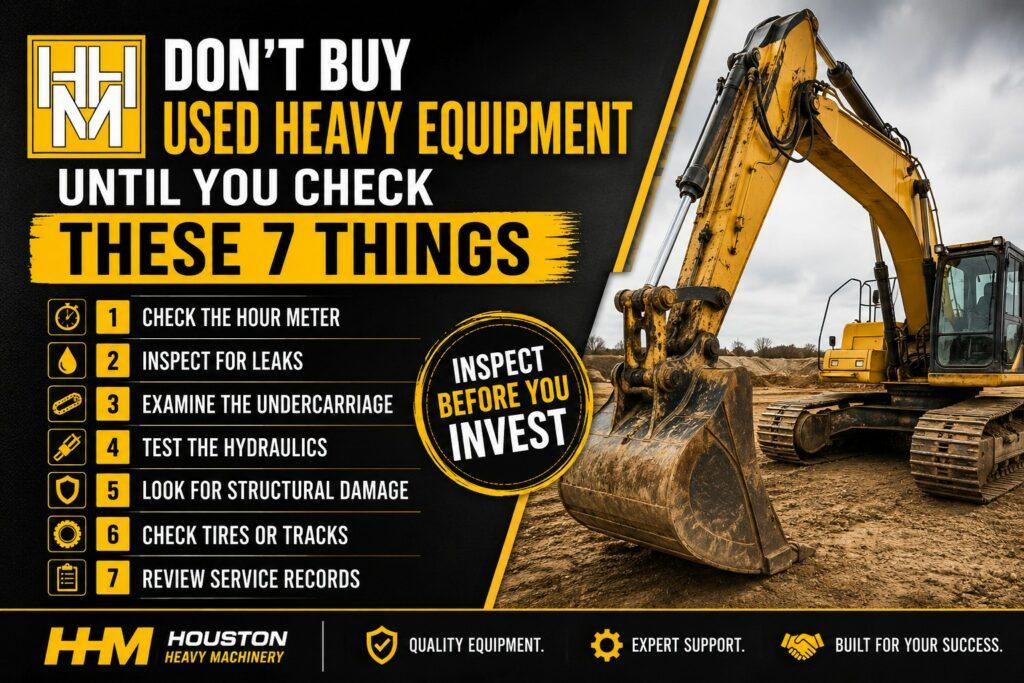
The Ultimate Used Heavy Equipment Inspection Checklist for Contractors

Buying used heavy equipment can be a smart investment. Contractors can save money while still getting the performance they need. However, not all used equipment is created equal.

Before making a purchase, it is important to inspect the machine carefully. A thorough inspection can help you avoid expensive repairs and unexpected downtime.

At Houston Heavy Machinery (HHM), we help contractors find quality used equipment that is ready to work. Here are some of the most important things to inspect before buying.

Check the Hour Meter

Equipment hours are similar to mileage on a vehicle.

Higher hours do not always mean a machine is in poor condition. A well-maintained machine with higher hours may be a better investment than a neglected machine with fewer hours.

Ask about:

  • Total operating hours
  • Maintenance records
  • Previous ownership history

These details can provide valuable insight into the machine’s overall condition.

Inspect for Leaks

Walk around the machine and look for signs of leaks.

Pay close attention to:

  • Hydraulic lines
  • Hydraulic cylinders
  • Engine components
  • Final drives
  • Fuel systems

Small leaks can turn into major repairs if left unaddressed.

Examine the Undercarriage

For excavators and track loaders, the undercarriage is one of the most expensive components to replace.

Look for:

  • Excessive track wear
  • Damaged rollers
  • Worn sprockets
  • Loose track tension

Undercarriage repairs can quickly add thousands of dollars to ownership costs.

Test the Hydraulics

Hydraulic performance is critical on any job site.

Operate the machine and watch for:

  • Slow movement
  • Jerky operation
  • Weak lifting power
  • Unusual noises

Hydraulic issues can affect productivity and lead to costly repairs.

Look for Structural Damage

Inspect the machine’s frame, boom, stick, and attachment points.

Watch for:

  • Cracks
  • Poor weld repairs
  • Bent components
  • Signs of impact damage

Structural problems may indicate the machine has been subjected to heavy abuse.

Check Tires or Tracks

Tires and tracks have a direct impact on operating costs.

Inspect for:

  • Uneven wear
  • Cuts or damage
  • Missing tread
  • Track deterioration

Replacing tires or tracks can be a significant expense after purchase.

Review Service Records

Service records tell an important story.

A machine with documented maintenance is often a safer investment than one with an unknown history.

Look for records showing:

  • Oil changes
  • Filter replacements
  • Hydraulic service
  • Major repairs
  • Preventive maintenance

Proper maintenance often leads to a longer equipment lifespan.

Start the Machine Cold

Whenever possible, inspect the machine before it has been started for the day.

A cold start can reveal issues that may not be noticeable after the engine warms up.

Pay attention to:

  • Hard starting
  • Excessive smoke
  • Warning lights
  • Unusual engine noises

These signs may indicate underlying problems.

Inspect the Cab

Operator comfort matters more than many buyers realize.

Check the cab for:

  • Working controls
  • Functional gauges
  • Air conditioning performance
  • Seat condition
  • Visibility

A comfortable operator is often a more productive operator.

Buy From a Trusted Equipment Dealer

One of the best ways to reduce risk is to purchase from a reputable dealer.

At Houston Heavy Machinery (HHM), every used equipment buyer has access to knowledgeable professionals who understand construction equipment. Our team helps contractors find machines that fit their needs, budget, and job site requirements.

Find Quality Used Equipment at HHM

Buying used heavy equipment does not have to be a gamble.

By inspecting the machine carefully and working with a trusted dealer, contractors can make a confident purchase and avoid costly surprises.

If you are looking for quality used heavy equipment, contact HHM today. Our team is ready to help you find dependable equipment that keeps your projects moving forward.

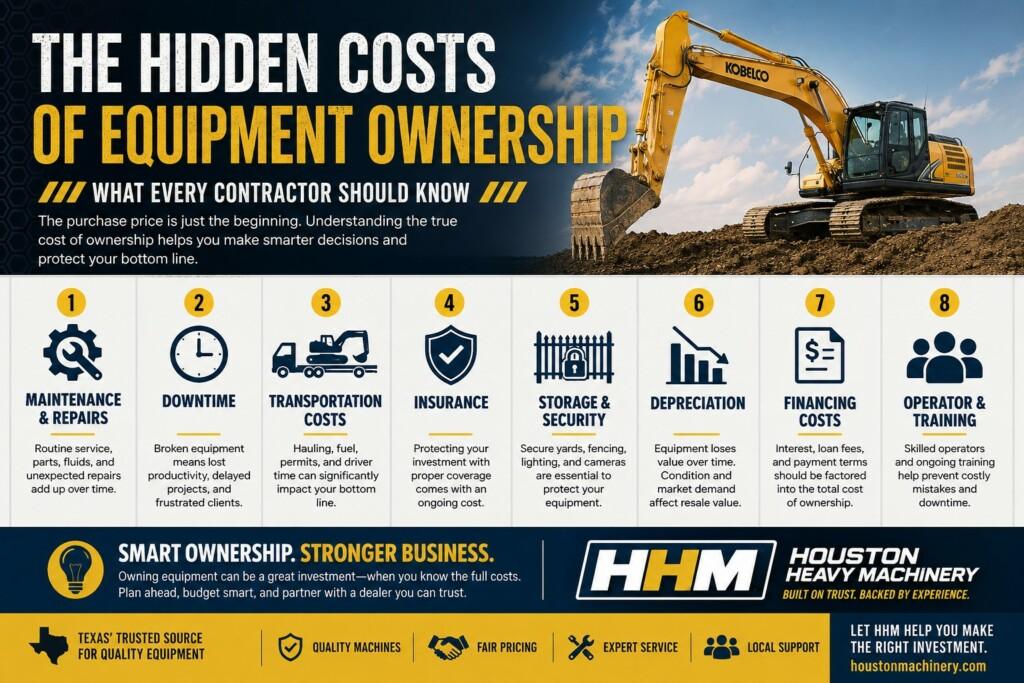
The Hidden Costs of Equipment Ownership Every Contractor Should Know

Buying heavy equipment is a major investment. However, the purchase price is only part of the story.

Many contractors focus on the upfront cost of a machine. Unfortunately, they often overlook the ongoing expenses that come with ownership.

Understanding heavy equipment ownership costs can help you make smarter financial decisions. It can also help you avoid surprises that hurt your bottom line.

At Houston Heavy Machinery (HHM), we help contractors throughout Texas evaluate the true cost of equipment ownership. Before you invest in your next machine, consider these hidden expenses.

1. Maintenance and Repair Costs

Every machine requires regular maintenance.

Oil changes, filters, hydraulic service, undercarriage repairs, and routine inspections all add to your heavy equipment ownership costs. While these expenses may seem small at first, they can quickly add up over time.

Preventive maintenance is one of the best ways to protect your investment. As a result, contractors who stay ahead of service schedules often experience fewer breakdowns and lower repair costs.

2. Downtime Can Be Expensive

A broken machine costs more than just repair money.

When equipment is down, projects can slow down or stop completely. In addition, operators may be left waiting while deadlines continue to approach.

Lost productivity is one of the most overlooked heavy equipment ownership costs. In many cases, downtime costs more than the actual repair.

This is why many contractors choose reliable machines from Houston Heavy Machinery. Dependable equipment helps keep projects moving.

heavy equipment maintenance costs

3. Transportation Costs

Getting equipment to the jobsite is not free.

Fuel, trailers, permits, driver wages, and hauling fees all contribute to ownership expenses. Furthermore, transportation costs can increase significantly when equipment moves between multiple projects.

Before purchasing a machine, contractors should calculate expected transportation expenses.

4. Insurance Expenses

Insurance is another important ownership cost.

Heavy equipment represents a significant investment. Therefore, proper insurance coverage is essential.

Coverage helps protect against theft, vandalism, accidents, and weather-related damage. While insurance is necessary, it should still be included when calculating total ownership costs.

5. Storage and Security Costs

Equipment needs protection even when it is not working.

Many contractors invest in secure yards, fencing, cameras, lighting, and access control systems. These measures help reduce theft and damage.

Although security costs are easy to overlook, they are a real part of equipment ownership.

6. Equipment Depreciation

Every machine loses value over time.

Depreciation affects the future resale value of your equipment. Because of this, contractors should consider long-term value before making a purchase.

At Houston Heavy Machinery, HHM helps customers choose equipment known for durability and strong resale value.

7. Financing Costs

Many contractors finance equipment purchases.

Financing can help preserve cash flow. However, monthly payments and interest charges increase total ownership costs.

Understanding loan terms before signing an agreement can help prevent unexpected expenses later.

Equipment ownership cost guide

Why Understanding Ownership Costs Matters

The most successful contractors look beyond the sticker price.

They evaluate maintenance, repairs, downtime, transportation, insurance, storage, depreciation, and financing costs before making a decision.

By understanding heavy equipment ownership costs, contractors can make better investments and improve long-term profitability.

Partner With Houston Heavy Machinery

At Houston Heavy Machinery (HHM), we help contractors throughout Texas find equipment that delivers long-term value.

Whether you need excavators, wheel loaders, compact track loaders, or used equipment, our team can help you make a smart investment.

Contact Houston Heavy Machinery today to learn more about reducing heavy equipment ownership costs and building a stronger fleet.

Heavy equipment transportation

The Ultimate Guide to Buying an Excavator in Houston, Texas

If you’re searching for excavators for sale in Houston, Texas, you’re likely looking for equipment that can handle demanding jobs while delivering long-term value for your business. Whether you’re working in construction, land clearing, utility installation, site preparation, demolition, or excavation, selecting the right excavator can have a major impact on productivity and profitability.

At Houston Heavy Machinery (HHM), we help contractors, developers, municipalities, and business owners throughout Texas find reliable heavy equipment solutions that fit their needs and budget.

Why Choosing the Right Excavator Matters

An excavator is one of the most versatile pieces of heavy equipment on any job site. From digging trenches and moving material to grading and demolition work, the right machine can improve efficiency while reducing operating costs.

Before purchasing an excavator, it’s important to consider:

  • Job site size and accessibility
  • Digging depth requirements
  • Lift capacity
  • Fuel efficiency
  • Attachment compatibility
  • Transportation requirements
  • Long-term maintenance costs

Choosing a machine that’s too large can increase operating expenses, while selecting one that’s too small can reduce productivity and increase project timelines.

New vs. Used Excavators

One of the most common questions buyers ask is whether they should purchase a new or used excavator.

Benefits of New Excavators

New excavators offer:

  • Latest technology and safety features
  • Manufacturer warranty coverage
  • Improved fuel efficiency
  • Lower initial maintenance requirements
  • Maximum uptime

Benefits of Used Excavators

Used excavators can provide:

  • Lower upfront investment
  • Faster return on investment
  • Reduced depreciation
  • Excellent value when properly inspected

At Houston Heavy Machinery, our team helps customers evaluate both new and used equipment options to determine which solution makes the most financial sense for their operation.

What Size Excavator Do You Need?

The ideal excavator depends on the work you perform most often.

Mini Excavators

Mini excavators are ideal for:

  • Residential construction
  • Landscaping projects
  • Utility work
  • Tight-access job sites
  • Backyard and neighborhood projects

Mid-Size Excavators

Mid-size machines are commonly used for:

  • Commercial construction
  • General excavation
  • Site development
  • Drainage projects
  • Municipal work

Large Excavators

Large excavators are designed for:

  • Heavy earthmoving
  • Major infrastructure projects
  • Quarry operations
  • Large-scale commercial developments

If you’re unsure which machine is right for your business, the equipment specialists at Houston Heavy Machinery can help evaluate your application and recommend the best fit.

Why Houston Contractors Choose Houston Heavy Machinery

When searching for heavy equipment dealers in Houston, contractors want more than just equipment. They want a trusted partner that understands the demands of the industry.

Houston Heavy Machinery (HHM) provides:

  • New and used excavators for sale
  • Equipment financing options
  • Equipment rentals
  • Parts support
  • Service and maintenance solutions
  • Experienced equipment specialists
  • Fast response times

Our goal is to help customers maximize uptime and keep projects moving forward.

Financing Options Available

Purchasing heavy equipment is a significant investment. That’s why Houston Heavy Machinery offers financing solutions designed to help businesses acquire the equipment they need while preserving cash flow.

Whether you’re purchasing your first excavator or expanding an existing fleet, financing can provide flexibility and allow you to invest in equipment without tying up valuable working capital.

Serving Houston and Surrounding Areas

Houston Heavy Machinery (HHM) proudly serves customers throughout:

  • Houston
  • Cypress
  • Tomball
  • Katy
  • Spring
  • The Woodlands
  • Conroe
  • Magnolia
  • College Station
  • Louisiana
  • Florida
  • Gulf Coast
  • Southeast Texas
  • We also ship our used equipment across the country and internationally like Mexico, Central America, South America, and even to places like Nigeria, Africa

Our team understands the unique challenges contractors face in the Texas market and can help identify equipment solutions built to perform in demanding conditions.

Looking for Excavators for Sale in Houston?

Whether you’re searching for a compact mini excavator, a mid-size production machine, or a large excavator for heavy-duty projects, Houston Heavy Machinery is ready to help.

Contact Houston Heavy Machinery (HHM) today to learn more about available inventory, financing options, parts support, and equipment solutions designed to keep your business productive and profitable.

Primary Sidebar

Products

  • Our Fleet

About

  • Media
  • Team
  • Careers
  • Privacy Policy
  • FAQ

Contact

  • 23215 State Highway 249
  • Tomball, TX 77375
  • (713) 864-4945
  • Employee Login

View Our Locations

(713) 864-4945

M-F: 8AM-5PM

Hablamos EspaƱol

This field is for validation purposes and should be left unchanged.